We all make mistakes

Using Mistakes as Teachable Moments

“Anyone who has never made a mistake has never tried anything new.” Albert Einstein

A mistake is defined as a wrong judgement or misunderstanding, an error in action, calculation, opinion, or judgement. Failure is defined as an absence or lack of success. However, there is a difference between a mistake and failure. A mistake is an incorrect, unwise, or unfortunate act or decision. A mistake can be caused by bad judgement, a lack of information, or a lack of attention to details. While mistakes can lead to failure, they do not always have to end in failure.

As teachers we make mistakes, and we need to make sure our students see us make mistakes, but more importantly they need to see how we react to the mistakes we make. Our students will make mistakes too, and the way we react to their mistakes is critical in their learning and developing as a student, the whole child, and even as an adult.

Use your own mistakes and the mistakes of your students as teachable moments in the classroom. You will make mistakes, so use them in a positive manner to show your own growth. Use the mistakes your students make as teachable moments also. If we hide our mistakes or act as if nothing is wrong, no one learns or grows from that moment. When we learn from the mistakes made, that is of value to ourselves, but it can also be of value to others. As a community of learners, when we make mistakes, learn from them, and then share with each other what we have learned, we all have grown from that moment.

“It’s a mistake not to use mistakes as part of the learning process.” Richard Curwin, Edutopia, 2014

Teachers can learn from each other in the same way. Collaboration among small groups of teachers is crucial to the education of our students. Imagine the growth and awareness that could take place among teachers, if we shared the mistakes we have made in the classroom and what we learned from those mistakes. Everyone benefits from the lessons we learn because of the mistakes we make as teachers. “When teachers learn from their own mistakes, they might be more willing to let their students learn from their own mistakes.” Edutopia, 2014

There are several things we can do in the classroom to show our students it is okay to make mistakes, especially when we are learning something from those mistakes. We need our students to understand, and know that we understand, that making mistakes does not mean failure. Making mistakes gives us the opportunity to relearn, to adjust, to adapt, to correct, to reflect, and to review how and why we answered something or even the behavioral choices we make in life.

  • Give your students an explanation on tests and assignments for the errors they made. Do NOT just mark them wrong with a big RED X.
  • Give your students a chance to review, go over, and when necessary correct their mistakes. Give them opportunities to review and redo. Their mistakes or errors become learning opportunities instead of failures.
  • As students review and redo their errors, improvement is going to become a significant part of the evaluation process. Improvement in their grades and work will show they are learning from their mistakes and give you opportunities to celebrate those moments with individual students or even with the whole class.
  • Be careful how you respond to a student’s mistake in the classroom. If a student makes a mistake in a class activity or discussion, do not say “No, you’re wrong. Can anyone help him?” Instead say something like “Why do you think so? Can you give an example?” Give them an opportunity to think about their answer and reflect. Again, opportunities for learning.
  • If a student needs help with an answer, give them the opportunity to choose a classmate to help them.
  • Have a focal wall in the classroom where students can share their mistakes and what they learned from them. Use this as a way of sharing with others how we learn from our mistakes.
  • At your weekly class meeting, ask if someone wants to share a mistake they made and what they learned because of that mistake. Do not forget, the teacher is the role model – share your own mistakes and what you learned.
  • Be sure to share your own mistakes, even if they are funny. This goes back to humor in the classroom, and how important humor is for the positive climate you want to establish. I shared my own mistakes quite often in the classroom and believe me there were plenty of mistakes to share. I wanted my students to realize I am human and that I learn from my mistakes also.

I will never forget one day I was late to school, (which did not happen often, and my students knew this). On this morning, when they realized how late I was they became concerned and worried that something was wrong. To alleviate their worries and concerns, I shared with them the reason I was late – After getting up late from a very restless night, I was not as alert as I normally was in the morning. So, after getting dressed and getting all my things together, I went out to get in the car and drive to school. However, when I went to start the car, nothing happened. The car just would not start. I tried several times to start it and still it would not start. I became very frustrated because I knew I was going to be late, so I called my husband to see if he could help me. He left work and drove all the way back home to help me get the car started. He got in the car, pushed the ignition button, and the car started right up. I just looked at him in amazement and confusion, and then I looked at the button he had pushed to start the car. That is when I realized that in my hurry to get to school, I had been pushing the button for the radio the whole time instead of the ignition button. Not something you want to admit to your students, or your administrator either, but nevertheless it was important for them to see I make mistakes and how I reacted to them. As soon as my students realized what I had been doing while trying to start the car, you could hear the giggles start and then one very brave student asked, “And Mrs. Murrell what did you learn from your mistake?” (A direct quote from me.) Her question initiated a class discussion, including making a list of things I could do next time to get to school on time and not call my husband from his job. One suggestion was to create a sign to place in my car indicating the ignition button. During our class meeting that week, this moment came up again, and we reflected on what important lessons we had all learned from my mistake. Valuable teaching moments!

Make sure your students have opportunities to learn from their mistakes, their errors, and even their wrong choices. Learning from our mistakes, errors, and wrong choices opens opportunities for growth; personally, academically, behavioral, and socially. Valuable life lessons for the whole child and the adult.

Happy National Teacher Appreciation Week!

“Every child deserves a champion, an adult who will never give up on them, who understands the power of connection, and insists that they become the best that they can possible be.” Rita Pierson

A champion is defined as a person who fights or argues for a cause or on behalf of someone else.

If ever there was a year when we need to thank our teachers, when we need to recognize National Teacher Appreciation Week, this is the year. Happy National Teacher Appreciation Week to all the Champion Teachers out there. You have continued to teach and continued to shine!

The teachers I have had the privilege to work with and watch over the last year, are champions. They are the front-line workers of education. They have struggled with all the changes, while at the same time wanting what is best for their students. They have missed and worried about their students. They have adapted and changed the way they teach, the way they plan, the way they communicate with parents, and even the way they assess their students. They have continued to learn new ways to reach out to their students and even the parents.

Characteristics of a Champion Teacher:

  • Positive role models
  • Dedicated and committed to their students
  • Provide good feedback to students and parents
  • Provide prompt feedback to students and parents
  • Maintain open communication between parents, coworkers, and administration
  • Use a dynamic and effective range of teaching strategies and methods
  • Caring
  • Encouraging
  • Challenging
  • Supportive
  • A Warrior for his/her students
  • A champion for each student

Champion teachers understand the impact they have on their students. They understand that their actions, words, the tone of their voice, and even the manners they use at the lunch table communicate something about themselves to their students. Champion teachers want those communications, those messages to be positive.

Champion teachers understand that their students learn their behavioral and moral characteristics more from what they observe in others in their environment than any instruction they will receive from a textbook.

Champion teachers understand that our greatest impact as teachers is not what we teach, it is our actions and words as adults. It is in how we carry ourselves through each day, through the ups and downs, and our interactions with others that they are learning from. We are teaching in every word we speak and in every action we make.

Champion teachers are those who have taught either in the classroom or virtually for the last year, overcoming unchartered waters in the field of education. Champion teachers are the ones who have remained positive and who have kept going despite a pandemic and fear all around. Champion teachers are the teachers who smile through the facemasks and face shields, through the plexiglass around students, through a zoom meeting or google classroom, and who have continued to give ‘virtual hugs’ so their students know they care and support each of them.  Champion teachers are the ones who have not stopped, who have kept going no matter the challenges presented to them, they are the champions who teach, who care, who encourage, who support, who understand, and who are committed to helping each child succeed.

“It’s the teacher that makes the difference, not the classroom.” Michael Morpurgo

No other time in history have we seen this more than in the last year. The teachers have made all the difference in the world and in the education of our students. We appreciate you!

Teamwork is Key

“Coming together is a beginning. Keeping together is progress. Working together is success.” –Henry Ford

“The most valuable resource that all educators have is each other. Without collaboration our growth is limited to our own perspectives.” Robert John Meehan

“Collaborating with other educators is like wearing sandals on a stony beach, it is too painful to imagine proceeding without them.” Robert John Meehan

Why is teamwork important in the classroom? Why is teamwork important in the school environment? Teamwork has been defined as a process among partners who share mutual goals and work together to achieve those goals.

Considering this definition teamwork in the classroom is important because the partners (students and teachers) share the mutual goals of each student being successful in a class project, assignment, or activity. They all work together to ensure everyone achieves success.

Considering this definition teamwork among the staff (teachers, paraeducators, administrators, and parents) work together for the mutual goal of each student achieving success and their maximum growth.

The school environment is changing for everyone, students, teachers, parents, and administrators. The classroom setting has changed from the traditional brick and mortar environment to virtual or a combination of both. The schools are changing for teachers and paraeducators also – things are new and present challenges that we have never had to overcome before. These changes present challenges for students, teachers, paraeducators, parents, and administrators.

Teamwork is needed more than ever before. We still have the same goals – student success and achievement, preparing our students for the future as adults. Yet, we must make sure that we are addressing the needs of the whole child as well as the teachers, and in a virtual or combination setting that becomes increasingly more challenging every day. Teamwork – collaboration – making connections – conversations – cooperation . . . all of these are needed to meet the challenges presented in today’s educational setting.

Neither teamwork in the classroom or teamwork among teachers, happens by accident. It requires effort and commitment from all parties involved, as well as a willingness to accept and work through the challenges of working together to meet your mutual goals.

The challenges faced through teamwork depend on the team members ability to appreciate the diversity within the team and understand that each unique person brings their own special qualities to the table. This is true for the teams within the classroom among students and the teams created among teachers and staff to help each student. Teamwork also depends on positive attitudes from the members. Teamwork requires team members to work together and plan together to meet the goals. Once teams are in place and work well with each other, the job to reach the mutual goals becomes less stressful and more achievable.

Again, teachers are the role models. A lot of responsibility rests on your shoulders for setting the example of effectively working as a team with our colleagues. Our students are watching, they are always watching. You cannot expect your students to work together in any subject or on any project, if they do not see their teacher effectively working with her colleagues as a team.

Set the example of good communication. Communication is key to effective teamwork. Communicate with your colleagues and parents as an example of what you expect to see with your students. Communication is necessary for any team to be successful!

Our students need to understand that being able to work together as a team is fundamental to being able to work together on any job as an adult. Teamwork in the classroom introduces a variety of skills that will be valuable for students as adults in the workforce. Students working together as a team with their classmates helps them appreciate each other’s differences and unique qualities.

Teachers who work together as a team with paraeducators, parents, and administrators benefit as well. Their students benefit as well. Each team member brings something unique to the team and each strength can only help each student achieve success.

The benefits for students working together as a team are vital for student success in school and in life:

  • Builds self-confidence
  • Reduces bullying
  • Teaches essential social skills
  • Sets students up for future success
  • Increased student effort
  • Higher student responsibility and student ownership for learning

The benefits for teachers working together as a team are also vital for student success in school and later in life:

  • Better, more effective instruction
  • Expanded teacher toolkits
  • Lesson consistency
  • More inclusive methods and strategies
  • Increased student effort
  • Higher teacher responsibility and ownership for her students’ success and achievement

Teamwork benefits all!

“Alone we can do so little; together we can do so much.” – Helen Keller

“Find a group of people who challenge and inspire you, spend a lot of time with them, and it will change your life.” – Amy Poehler

Mutual Respect in the Classroom

“Great teachers empathize with children, respect them, and believe that each one has something special that can be built upon.” Ann Lieberman

Mutual respect in the classroom is necessary for a safe, encouraging, and engaging classroom. Mutual respect involves more than the interaction between students and the teacher, it should mean mutual respect between your students as well. Mutual respect sets the stage for a classroom that is conducive to learning taking place and where students feel safe and included.

Building relationships with your students begins with modeling respect for your students and setting expectations for respect among your students. In a respectful classroom environment, everyone’s voice is recognized and appreciated. In a classroom where mutual respect exists, you will also see the essential elements of democracy – liberty, justice, common good, equality, diversity, and truth – all of these are necessary for students to thrive and contribute to their classroom in respectful ways. These essential characteristics should be a part of the first days of the school year. Begin modeling respect on the first day, and not just with your students. Show respect for parents, coworkers, administrators, and school staff. Your students need to see you showing respect for those around you as well as your students. They mimic what they see. Show them what respect looks like. A large part of creating a classroom environment of mutual respect is ensuring that your students feel safe; they need to feel safe socially, emotionally, intellectually, and physically.

Often, students/people who act disrespectfully do so because they feel disrespected themselves. Spread the respect. “Emotions are contagious. When we feel listened to, taken seriously, appreciated, and respected, we tend to ‘pay it forward’” (James Comer, 1999)

Activities to foster respect and inclusivity:

  • First and foremost, create trusting relationships with your students; let your students know you care – ask how things are going in their lives, pay attention and respond to students’ comments, express sincere appreciation for their efforts and accomplishments, and reaffirm your faith in your students’ ability to learn.
  • Be aware of your students’ cultural backgrounds; use regular check-ins, class meetings, conferencing, observations of students and their work, and communication with family, and use dialogue journals or writing prompts so students can share their experiences with their families and their cultures.
  • Model and role play critical social skills; these should include sharing and showing sympathy. Model concepts like respect and compassion, guide norm-setting for these concepts as well.
  • Encourage student voice, responsibility, and cooperation.
  • Acknowledge students who demonstrate kindness, respect, and thoughtfulness; this can be through a classroom display, in your weekly newsletter, or on your website. Let your students know you observed what they are doing and how they are treating each other. Take this a step forward and give your students opportunities to recognize and acknowledge the same actions in their classmates or to acknowledge their classmates’ strengths. Again, this could be through a display in the hallway, students writing notes to each other, or during class meeting times.

A personal moment of relationships, respect, and your students feeling safe:

Here go those relationships again . . . This is what is important, especially for the ones I taught, but really for all children! Every child should FEEL SAFE at school or anywhere. A student once sent me this text. “I loved being in your class. I always felt safe when I was close to you. And I will stay in touch.”

It truly is about building relationships, ensuring your students are engaged, that they feel safe and respected, and that you care about them.

What About Our Teachers?

Stress = Teacher Turnover and Teacher Burnout

Today teachers face more stress than ever before in the classroom, and even though I am no longer in the classroom I see it and hear it in the faces and voices of my friends who are still teaching through the added stress of a pandemic. They are still giving their all every day to help each child succeed, and they are teaching through changes in the classroom settings, more pressure for students to succeed, and the negativity they face from all of those who do not understand how much they give each day. I remember the stress of teaching throughout my 28 years, and the moments of self-doubt and self-efficacy. And where my memories of teaching are filled with happy, rewarding moments, they are also filled with the stress, the forever changing mandates and curriculum, and the expectations for every student to pass the state tests at the end of the year. I always thought it was so unrealistic to put that much pressure on the students and the teachers to focus on a score of one test, instead of all the gains the teacher sees in her students throughout the year. Now we add teaching through a pandemic, teaching virtually and in the classroom, more demands from administrators and parents, and we are just adding to the stress and frustrations that each teacher feels.

“Burnout is one of the most common reasons that teachers are leaving the profession, and it contributes to the increased teacher turnover rate in the past few decades.” Waterford.org, 2019

“A primary source of stress and burnout in the classroom is low self-efficacy, or a teachers’ lack of belief in themselves to achieve their goals. One of the main reasons a teacher’s self-esteem suffers is the tendency of parents and administrators to blame teachers instead of students for low standardized test scores.” Waterford.org, 2019 I remember this feeling well, and wrote in my journal about those very feelings.

“Yesterday was just one of those days; rough, emotional, and a true pity-me party! This morning I woke up ashamed of how I let the devil get a hold of me and pull me down to his level. He had me doubting my own ability to teach, my God-given ability to teach. He had me full of self-pity and doubt, neither one should have ever happened. All because of a test! I did the exact thing I promised I would never do. Every year I tell my students that I love them for who they are and that I will always be proud of them, no matter what. On the mornings of tests, even yesterday, I leave notes of encouragement on all their desks. I tell them they are STARS in my eyes, that a single test score will not change that. I tell them from the very beginning of the school year, that if they give their best in everything we do, I will always be proud of them. Yet, yesterday I let the fact that some of my girls did not score as well as I wanted them to on one of our big tests, that they did not meet their goals get the best of me. I got mad, I was disappointed, and I was sad all day. How dare I! How could I do that to the precious souls that walk through my door every day, just wanting a hug or a smile. I did not even stop to think of them until this morning, when I was in my quiet time with God, and he let me know quick that they give everything they have every day, just so I will be proud of them. It was a Monday morning, and I did not even stop to think or wonder about their weekends and what things they had to deal with, I did not stop to think or wonder if they even had a good night’s sleep, or a warm breakfast. I just thought of ME, until again I had a “Come to Jesus” moment and realized how much the devil played a part in how I was feeling.  It does not excuse it, because I know better. I know how strong he is, and how much he can make us doubt our own abilities, how much he can make us doubt God, and how strong he can pull us away from our faith in God and his plans for our lives. I fell for it yesterday, big time!

I doubted myself and the God-given talent of teaching He was gracious enough to gift me with. I doubted why I even do what I do. Then this morning, I was gently reminded that I do what I do because it is God’s plan, he put me right there in that classroom. He knew there was going to be a day that I would doubt him, that I would get so frustrated I wanted to cry, that I would be sad yet again, but He still placed me right there, for that very reason. I needed to have that experience.

So today was a new day! I approached it through the eyes of someone newly awakened to God’s plan. I looked at my girls once again, not through some state mandated test that says they are not progressing or growing, and instead looked at them and listened to their conversations and knew all I needed to know.  I edited their science projects that they will present Friday morning, and sat in awe of their hard work and their dedication to quite a task I had given them over a month ago. I am amazed by the hours of research, collaboration, and cooperation it took on their part to get to where we are today. That showed me all the growth I need to see. I listened to their conversations at the end of the day, simply by viewing a simple photograph of a Holocaust memorial. I listened to their compassion for others, I listened to their thoughts and ideas of how people treat each other simply because they are different, and I listened to their questions and outrage over even children being killed. And at the end of the day, I thought with pride of how much they have grown, how far they have come, and how much more important that growth is than a single score on a single test.

My job as a teacher is not to teach to a test, or even to prepare them to take and pass one test or two. My job as a teacher is prepare them to be a part of society, a successful part of society. My job is to let them learn how to work with others, how to work with everyone – even the ones we may not like. My job is to model compassion, model a love for learning, model a love for others, and to model respect for the differences we all have. Yesterday I failed them! That will not happen again. There is not a test worth it!

I would love for one, just one legislator to come into my room. Sit down and just listen to the conversations. Ask them questions. Truly listen to their questions and concerns for life. Then after a day, tell me that their conversations and their concerns for their fellow man and their futures, are not enough to count their successes and their growth for a year. It tells me more than a test score ever could.”

We need to watch out for our teacher friends, we need to see them as frontline workers today and throughout this pandemic, and in the future. The effects of what we are going through right now, will last for years to come because of the changes we are experiencing in the educational setting. We need to watch for the signs of burnout in our teachers, and look for ways that we can offer assistance, encouragement, revival, and renewal.

              Signs of teacher burnout:

  • Irritability
  • Quick to anger
  • Chronic fatigue and exhaustion
  • Chronic insomnia
  • Changes in appetite
  • Brain fog
  • Depression
  • Anxiety
  • Physical symptoms
  • No desire to go out and socialize with family or friends
  • No longer caring about student discipline and classroom management.
  • Lowering standards for students and self.
  • Failing to carefully plan or prepare lessons.
  • Increasingly having a negative attitude toward school and students.

Teacher burnout can bring on several negative effects, such as increased absenteeism, decline in classroom performance, and poor interpersonal relationships with colleagues and students. Burned-out teachers are usually less sympathetic toward the problems of students, and are less committed to their jobs. A teacher’s physical health can also suffer due to teacher burnout, and as an effect it impacts their productivity and involvement as educators.

The effects of teacher burnout on students can be any of the following:

  • Less support for their students and their learning, achievement
  • More students ‘falling through the cracks’ has also been noted
  • Low performance from students
  • Students become more apprehensive and feel less safe in the classroom
  • Students become less likely to voice their thoughts in the classroom
  • Students have the tendency to copy the mood of their teachers

However, the effects of teacher burnout can also reach out into the school community. Teachers suffering from teacher burnout are less likely to interact with their coworkers. They are also less likely to collaborate with their coworkers in planning curriculum and lessons. Relationships between the teacher suffering from burnout and her administrators and coworkers become more fragile.

The negative effects of teacher burnout are extensive. There are positive strategies schools can put into place to help prevent and lessen teacher burnout.

  • Coach instead of managing!
  • Acknowledge and reward good work; we tell our teachers to do this for their students all the time, but quite often we fail to do acknowledge and reward the good work of our teachers.
  • Establish and maintain a positive school climate for everyone!
  • Create support groups within your school community.
  • Allow teachers to share their workload with their coworkers, within their teams. Teachers sharing their expertise with each other can only have a positive impact on the teaching effectiveness within your school.
  • Encourage your teachers to take personal time off (typically the days are included in the school year, but it is frowned upon for them to take the days. This needs to change.)
  • Encourage your teachers to participate in professional development that is designed more for their well-being than curriculum or mandates. Remember we are focusing on the whole child; we need to focus on the needs of the whole teacher as well.

We need to remember:

“Teaching is the essential profession, the one that makes all other professions possible.” David Haselkorn

The art of storytelling in the classroom . . .

Storytelling . . .

The art of storytelling has been around since the beginning of time. Storytelling has been widely used for years to share stories of celebrations, achievements, traumatic events, wars, and just personal experiences. Storytelling has been a great way for ancestors to pass down the stories of how families began and how they got to where they are today. Storytelling in the classroom offers the teacher many possibilities as a teaching tool, yet one that is not practiced as often as it has been in the past.

Uri Hasson, a professor of psychology at Princeton, gave an exceptional TED Talk where he explained the magical effects of storytelling…

“When the woman spoke English, the volunteers understood her story, and their brains synchronized. When she had activity in her insula, an emotional brain region, the listeners did too. When her frontal cortex lit up, so did theirs. By simply telling a story, the woman could plant ideas, thoughts and emotions into the listeners’ brains.” But besides synchronization, stories have become so much a part of us that we actually think in stories. We tell stories to explain how things work. We tell stories to help us make decisions. We tell stories to justify the decisions we make. We even tell stories to create our own identities.”

Think of this same situation in terms of a teacher, and her students. When a teacher tells a story to introduce a new unit or to help her students understand an abstract concept, this same reaction could happen, and the teacher has planted ideas, thoughts, and emotions into the minds of her students. Using storytelling as a teaching tool can be highly effective for all students.

“If you think about it, stories are the very origin of education. The passing down of stories from generation to generation taught us history, culture, skills, and knowledge. “Thinking of teaching as storytelling…encourages us to think of the curriculum as a collection of the great stories of our culture,” says Kieran Egan. “If we begin to think in these terms, instead of seeing the curriculum as a huge mass of materials to be conveyed to students, we can begin to think of teachers in our society as connected with an ancient and honored role. Teachers are the tellers of our culture’s tales.”

              Learning should be multi-layered. A story from me about my mother growing up during The Great Depression, working in the mills to help her family, or her memories of WWII and when the war ended would trigger ideas and stories from students, and even sometimes their parents, about their own relatives’ opposite perspective on the same historical events, this led to students interviewing family members and recording their own oral histories. This led to us looking at historical events from different points of view, which led to a lot of questions and discussions. My students took this another step which involved them researching the events and gaining more information and yet more perspectives. Such a deeper understanding of the historical events was gained because of a simple story that generated curiosity, interest, and engagement. Multi-layered lessons end in multi-layered learning which is so much more effective for the students.

              Become an expert storyteller for your students. Use stories to captivate and make their learning experiences more compelling than just teaching from the book. Storytelling can be used to introduce new topics or concepts, make real life connections, and even to model writing. Storytelling has many effective benefits for the teacher and the students:

  • Being able to tell a story leads to students being able to write a story.
  • Telling stories encourages students to read to find out more about an idea or event.
  • Telling stories encourages students to read more and therefore, develop a more vivid vocabulary to use in their own storytelling, verbally and in writing.
  • Storytelling helps students learn how to ask more effective questions.
  • Telling stories and listening to stories encourages students to become critical listeners, encourages them to listen for details and descriptions, to listen for emotions, and storytelling encourages them to relate more to the ideas and the events being described.
  • Storytelling also helps build relationships and community within your classroom. Personally, I have found that sharing my personal stories with my students, not just the funny, light-hearted stories, but the ones of personal trauma and sadness opens communication with my students. My willingness to share my stories encourages them to share their stories about their own personal experiences with me.
  • Storytelling humanizes you and lets your students see your own imperfections, again opening communication between you and your students. 

I love this quote because I remember listening to stories from my grandfather and parents, and how listening to their voices made me feel safe and secure, warm, and comfortable like being wrapped in a blanket in front of fire with a cup of hot cocoa. ““Most importantly, storytelling is simply part of our humanity – part of our shared DNA. It soothes and feels like a warm blanket around us.” Using storytelling as a teaching tool can build student engagement and allows students to visualize content in their minds. A 2010 study in the Proceedings of the National Academy of Sciences showed an intimate connection between the brain activity of speakers and listeners in conversation, demonstrating how the brain of an engaged listener “syncs up” with a speaker,” says A.J. Juliani. “By engaging students with compelling stories that impart important material, teachers reach students both emotionally and biochemically, increasing the potential for rich learning experiences.”

Students need stories. Students need stories that draw them in by sparking their curiosity and interest. Storytelling crosses boundaries of time, place, age, and cultures. Storytelling gives students an insight into the world outside their own lives. Storytelling exposes students to a broader vocabulary and expanded thought processes. Storytelling opens up the world to our students and lets them see the world from someone else’s perspectives.

Storytelling in the classroom has always been a passion of mine. When storytelling is done effectively there is nothing more fulfilling than seeing the light in your students’ eyes as they become intrigued and curious about the characters and events in the story. The questions they ask, the responses they share, the discussion that follows, and especially the desire to research or gather more information is enough to give this teacher’s heart a sense of fulfillment and knowing that classroom with those students is exactly where I was supposed to be. Effective storytelling generates impromptu responses like the following from students, years after they were in your classroom.

  • “You were such an amazing teacher! Your stories deserve to be heard.”
  • “This touched my heart as I was just recently thinking about you and how much of an impact you made on my life! You are by far one of the most special people I have ever met. Your stories are such a blessing to people and are well deserved to be told and heard. You are one of the reasons that I am so strong today. You will never be forgotten, and all of your students are so lucky to have the opportunity for you to be their teacher!”
  • “This makes me so happy! I cannot wait to read every single story. Your stories are my absolute favorite!!”
  • “Your stories were always the best part of the day; I can’t wait to read all that you write.”

Laughter is the best medicine

Incorporate Humor in your classroom:

According to helpguide.org, “Laughter is strong medicine. Laughter strengthens your immune system, boosts mood, diminishes pain, and protects you from the damaging effects of stress. Nothing works faster or more dependably to bring your mind and body back into balance than a good laugh. Humor lightens your burdens, inspires hope, connects you to others, and keeps you grounded, focused, and alert.”

Look at the effects of laughter! How can you not relate that to the classroom, and see the impact humor will have on the student’s engagement, on the relationships in the room, and the academic success your students will achieve?

It is a known fact that humor activates the brain’s dopamine reward system, stimulates goal-oriented motivation, and long-term memory. All of these can only add to the success of your students and the structure within your classroom. Humor activates our sense of wonder, which is where learning begins, so it is only logical that humor can impact your students and their ability to learn.

Using humor appropriately in the classroom can have a positive effect on the students and on you. Humor can enhance classroom joy, humor can be used to establish a sense of community, and to enhance instruction. Use content-related humor in situations where the students are having a difficult time understanding or remembering. A humorous story or anecdote is something they will remember and be able to relate it back to what the content is. Humor can be ‘sandwiched’ in between instruction and repetition. Make sure your humor is age-appropriate also! Remember also that humor can simply be your ability to laugh at yourself when you make a mistake. Let your students see your ability to laugh at yourself, and they will relate to you on a more personal level. Building relationships!

I have always felt that having humor in the classroom is a sign of a healthy environment, conducive to your students feeling safe, being engaged, and being able to learn and achieve. I am quite sure that we laughed in my classroom every day of the 27 years I taught. Laughter is the best medicine and so important in building community within your classroom. When your students feel safe and comfortable, believe me they will provide many opportunities for laughter and wonder. Those were my favorite moments. Enjoy the moments of laughter below:

“The best part of the day was coming back from our Tornado/Fire Drill, and for some reason one of my students asked, “Mrs. Murrell, does your husband get in trouble when he doesn’t do something you want him to do?” I asked her what she meant, and she replied, “Well, last night my daddy got in trouble with my mom, and he had to sleep on the couch. So, I was just wondering if Mr. Murrell has to sleep on the couch.” I just jokingly said, “No, he doesn’t have to sleep on the couch, but there have been times he has been in the ‘doghouse.’ The next reaction from another student killed me, “Mrs. Murrell, how could you make a handicapped man sleep in the doghouse? That is just not right, Mrs. Murrell. I am going to have to stand up in Mr. Murrell’s defense, and demand you treat him right.” It took me a minute to realize that she thought I was serious, and she knew Steve has had a lot of surgeries this year, and she was really worried about him sleeping in the doghouse. So, we discussed slang and humor, and that is another example of an idiom. But it touched my heart, that she would be that concerned about him.”

“Then there is the fact, that my class has just had a wonderful 3 days back in school. We have probably laughed over 1/2 of each day but isn’t it wonderful that they feel relaxed and safe enough to do that in school. One of my students asked me today how students are chosen to be in my class, and I jokingly said Mr. Golden chooses students who he thinks will work well with the teacher. She thought a moment, and then asked, “So does that mean we are crazy too?” I answered, “Sure!” She replied, “Great! I want to be just like you.”

Where the examples above are not content-related, they were real moments. Moments where the students felt safe enough to share their thoughts and in the process, they added some laughter and smiles to our day. I cannot think of anything better as an example of our community within the classroom.

Humor when used inappropriately can have a negative effect, so make sure you are not being sarcastic. Sarcasm and humor are not the same thing. Sarcasm is meant to mock or convey contempt. Make sure your humor is not cruel or forced. Make sure you can relate the humor to the content or to a situation in the classroom. Too much humor can also have a negative effect. Students need to take learning seriously but know that it is okay and beneficial to laugh in life too.

Appropriate, content-related humor can be a positive tool to enhance learning. Learn to laugh! Smile!

Going the extra mile

Letting your students know you understand they have lives outside of the classroom can look different for each teacher. Teachers have lives outside the classroom too, so each teacher needs to go that extra mile according to what fits their own lives. Below are just some suggestions to help you find that perfect way for you.

  • Talk to your students about their interests and extracurricular activities they participate in,
  • Take an interest in their lives (hobbies, sports, church, cultural, and even family), ask questions to let them know you care and are interested,
  • Attend some of their games, performances, or other extracurricular activities,
  • Encourage your students to research and explore their hobbies and interests. Encourage them to explore how they can turn those passions and interests into a career.
  • Be considerate when assigning homework – remember that they do have lives outside of school. Those lives involve time with their families, time with friends, and time building skills in sports, hobbies, or other activities that will help them become well-rounded adults.
  • Bring those interests and cultural backgrounds into the classroom with relevant reading materials, use everyday examples from their interests and activities, link their interests and hobbies to learning, and give them choices when there are picking topics for research.
  • Encourage their outside interests to foster their own learning.

Each teacher needs to take the direction that works best for his/her life. Each teacher needs to know his/her students and what they need to succeed.

Personal note: The last 9 years of my teaching career were at a school in one of the highest poverty communities in Greenville, SC. It was my choice to make the transfer, I wanted something different. It quickly became apparent to me how important it was for my students, and the students across the school, that I became interested in their lives, personally, socially, and academically. Soon after my transfer, my husband and I moved into his childhood home, which placed us close to the community of my school. What a unique and incredible experience. On a weekly basis, I would see my students or students from my school in grocery stores, restaurants, the pharmacy, and even in the hospital. Every time there was such a look of awe on their faces just because they saw ‘Mrs. Murrell’ at the same places they visit. When they would see me at school the next day, again there was that look of awe on their faces and they would start a conversation with me about why I shopped at their stores, or what did I like most at the restaurant, and so much more. There were even moments when they would ask me at the end of the day if I were going out to eat or to the store that evening, hoping they would see me again. They loved having that connection with me outside of school. Students come by my house to say hi, or to come Trick or Treating. I even started summer book clubs at my house, and many of my students would come every week during their summer vacation. We read and discussed books, ate lots of food, just talked about life as a 6th grader, and laughed a lot. So many connections were made, and these students were not in my class anymore. They still come by to visit. Valuable connections were made through simple trips to the grocery store, and those connections helped foster an environment in the classroom that made learning more meaningful and real to them.

Making connections with them outside the school is vital to their success, whether it is going to their games, performances, the grocery store, or just having meaningful conversations with them. They need to see that you have a life outside of school, and that it is very much like their lives. When you purposely set out to make connections with them, go that extra mile, it shows them you care about them. It tells them you want them to succeed, and you want to do all you can to help them succeed.

Relationships in teaching . . .

“the most powerful factor in transforming students is a relationship with a caring teacher who a kid feels particularly connected to.” It is the teachers who make such an impact that students seek out many years later, and reconnecting with your students can be a highly rewarding experience. Not only does it give you the chance to see where your students end up, it also gives you the chance to hear their gratitude and to truly know the kind of impact you had on them.

Just one of those days, those reflections about teaching and building relationships

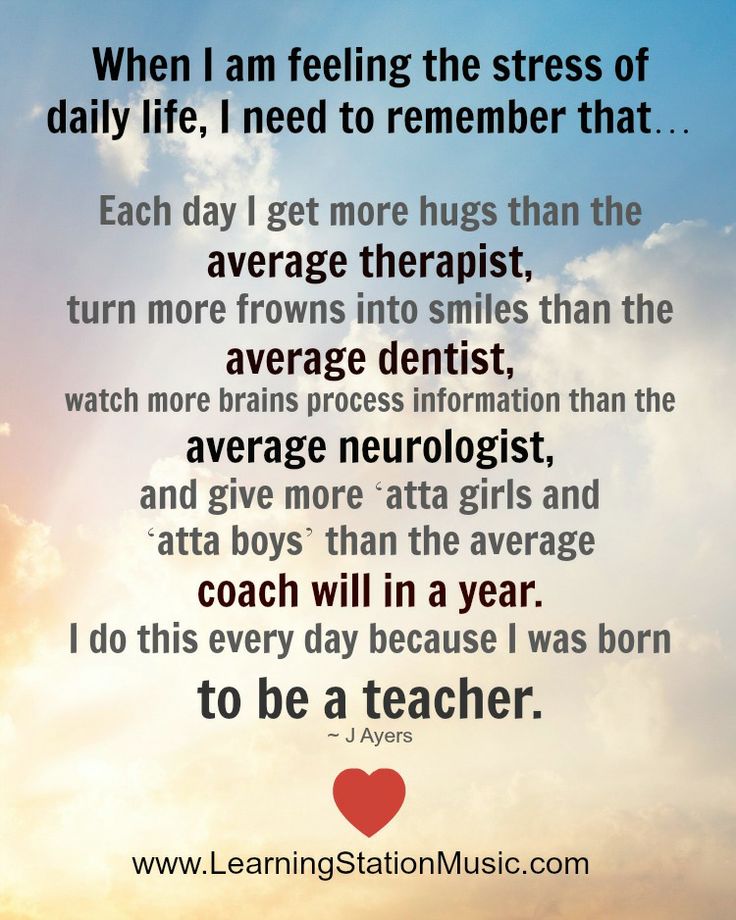
During my twenty-eight-year teaching career, there were many moments where I questioned myself on why I became a teacher. I truly feel God created me to be a teacher, and it is not that He was not there every step of the way, but just like any path in life, there were obstacles and tests to make sure we are giving 100% to whatever God designed us to be.

The student in my room who struggled everyday with learning disabilities, yet she went from 13% on her reading assessment at the beginning of the year to 60% at the end of the year! This is why I teach!

The student who squealed with delight and jumped in my arms, when she saw me in the store. This is why I teach!

The student who sent me an email once to tell me she had all As in 6th grade this year! This is why I teach!

The students who contacted me to tell me they were graduating from high school, graduating from college, getting married, having babies, or just to say hi.

The students, like Tiffaney, Georgia, and Julia, who will meet with me to have a cup of coffee and let me know how things are going in life, their decisions about their future, or just to talk. This is why I teach!

To hear students fascinated and in awe when I would share Mr. Murrell’s WWII treasures. This is why I teach!

To see that student who struggled every day with math or science, have that Aha moment and the light just shines from their eyes! This is why I teach!

But I also taught because I loved the laughter, the smiles, the most random questions and comments, and the opportunities to share stories in hopes the stories would encourage my students to be different, to stand out, to have a voice, and to become everything they were created to become! This was truly why I taught!

Teaching, then and now, should not put its emphasis on testing! To quote one of my students from years ago, “Mrs. Murrell, if they make us take one more standard test, they will make us all become STANDARD PEOPLE, we will not be unique, different, or have choices. We will just be STANDARD!” This is why I taught!

Here go those relationships again . . . This is what is important, especially for the ones I teach, but really for all children! Every child should be able to FEEL SAFE. A student once sent me this text too. “I loved being in your class. I always felt safe when I was close to you. And I will stay in touch.”

Many times during my teaching career I was asked, “Why I become so personal with my students?” Why would you not become personal and build relationships with your students? It seems to me that the atmosphere in the classroom improves, it becomes more conducive to the learning you want to take place, and the students see that you genuinely care. When these things take place, learning – real, deep learning – is going to happen!  I do not want them to walk in my room in August, and out the door in May, and nothing has changed between the two of us. I want them to walk in, with the expectation that we are going to learn this year, we are going to learn things about each other, we are going to learn what they need to know to be prepared for middle school, they are going to learn that I have high expectations for their work, attitude, and behavior, and they are going to learn that I love to laugh, make my classroom inviting to them, and that learning can take place while we are having fun. They are going to learn to have respect for each other and they are going to learn that I care about them, not just the student, but the person! They are going to learn that for me it does not end in May when they walk out the door, that I want to know how they are doing in life! I want to see them celebrate their accomplishments, know that life is going well, see how they face the challenges that will come their way, and watch them become all I knew they were capable of. Life does not end in 5th grade; it is just beginning. If we build relationships with our students, we get to see them grow, succeed, and know that we helped build the foundation for all that they will become! I have seen so many grow, graduate, go to college, get married, have children, and become successful adults. What an honor to be a small part of that! Relationships between teachers and students are so important to the growth and development of not only the student, but the teacher as well! My life is full and rewarding because of those relationships!  I would not have it any other way!

Is there such a thing as too personal when you are trying to teach and inspire students to do their best, despite the obstacles in their way? I do not think so! In December 2016 I had the opportunity to embark on an even more up-close and personal adventure with a student, and no one warned me to stay away, keep my distance. I thought it was so odd at the time. On Christmas Eve 2016, a student and I spent the entire day together, driving to Charlotte, NC, cheering for our team, and driving back home together and no one finds that odd. Yet, I had been invited to bridal showers, weddings, baby showers, I had been asked to pray for families of students I had taught, I had been invited to high school and college graduations, I had even been invited to funerals of family members, and so many other events in the lives of students I had taught, and each time I was warned to back away, keep it professional. How does a teacher, who hopes to inspire and encourage, keep it only professional? That day in December 2016 marked a milestone for me, and what I believe is extremely important in being an effective teacher – building relationships! How can you not spend a day with a student at a football game, and not be personal with your students. She was so excited, and I was even more so, not necessarily about the ballgame, but just being able to spend the day with a student with no one telling me what I should or should not be doing, that is up close and personal!

At the end of the day with Alexus, all I could think was “What a day!” Alexus said she received the best present ever today – spending the day with Mrs. Murrell at the ballgame. It was a great day for me too! We bought her some souvenirs, food, and just really enjoyed our time. It did not really matter that our team did not win! Her statement at end, “Thank you, Mrs. Murrell! I never thought I would get to see a ballgame live! This was the best day. When we get back to school, can you help me write a thank you letter to Mr. Gowdy?” And that was exactly what we did.

Relationships with your students is vital to your student’s success and achievement. My heart has been hurting all day. I walked into my class this morning, excited about seeing my girls and letting them talk about their spring break. They started coming in and they could not wait to tell me everything. As the last ones came in, I noticed a change in the mood and as I talked to one student, she told me that her grandfather died over spring break, so she spent her week with family and funeral events. I could tell she was still really hurting.  I just hugged her and watched her during the day. Another one of my girls dealt with her mother having surgery over spring break. She wrote in her journal this morning about hospital rooms and smells, and how scary it was that her mother had surgery. Then there is the student, who as she was writing in her journal just stops and looks at me and says “Mrs. Murrell, I know there are some things we are not supposed to talk about in school, but I have a question and no one else will take the time to answer me. Can you answer my question?” “Well, you know I will try. What is your question?” She responds, “Well, yesterday our pastor kept talking about Jesus and this long ‘R’ word and I just don’t understand. Do you know what the word is?” I asked her what else her pastor talked about, and she said Jesus dying. “Was the word resurrection?” “That’s it, Mrs. Murrell. What does it mean?”  I explained in simple terms what it meant, and she just sits there and smiles. She said, “That’s pretty awesome, isn’t it, Mrs. Murrell!” I smiled and said, “Yes, it is pretty awesome!” Before the conversation goes any further, another student steps in and says, “You should have just asked me, we can talk about it all we want. Mrs. Murrell really isn’t supposed to though and we don’t want to get her in trouble.” I just laughed and told them it was ok. God sure does have a funny, but right way of keeping me grounded and aware that he is always there, watching and listening! Spring break was wonderful, but life in my classroom is amazing!

Retirement came shortly after June 5, 2019. This was my reflection on that last day of school, on that last day that I would have the ability to make an impact with students. “Well, this is it! Tomorrow will be my last of the important lasts! My last class of Mrs. Murrell’s Pearls will walk through my door, tell me good morning, then shortly after will leave for summer break, and I will realize I have heard my LAST hellos and goodbyes for a lifetime. As I sit here tonight, I reflect on all the lessons learned through 28 years of teaching, but wait I was the teacher, wasn’t I supposed to teach the lessons, not learn them? However, any true teacher will tell you we learn from the students and the experiences as much as the students learn from us. About 20 years ago, I learned a valuable lesson from a very precocious little blonde hair boy. A precious one, who had way too many questions for each day, so being the smart teacher I was, I decided to limit the number of questions he could ask each day. I even went so far as to give him a certain number of tickets each day, and when his tickets were gone, he could not ask any more questions. Until one day when he still had about 2 hours to go in the day, and he only had one ticket left. I asked him, “Are you sure this question is important enough to use your last ticket.” In all seriousness, he answered “Yes, Mrs. Murrell!” I told him okay, and he brought me his last ticket. He looked at me, and smiled, and said, “I don’t really have a question, I just wanted to tell you how much I love you and how much I love being in your class.” After several seconds I cried, and then gave him back all his tickets. Then we threw them all away! No more tickets. Lesson learned: sometimes our students may act in a way, that has nothing to do with learning or education, they just need to know someone cares. This lesson and many more have been taught to me by students, more numerous than I can count every year. Fast forward 16 years, and even more students thank me for the things I have done in their lives . . . and I am thanking God for their presence in my life. God continues to bless when we follow His will and direction! The lessons have been many: how to overcome obstacles like parents being killed, homelessness, abuse, and neglect, yet they still come to my classroom door with a smile and a willingness to learn and become more! Then comes today, just when I think my heart cannot take anymore, God says, “But Lynne, I am not through teaching you the lessons!” Bring it on! And He did, when a student with tears in her eyes says, “Mrs. Murrell, this is just too beautiful, I can’t eat it!” Or “Mrs. Murrell, I have never seen anything so beautiful.” Simply teaching me “Please don’t take what I give you for granted, there are others who will appreciate every little thing.”  I do not think I will ever tire of the lessons God teaches us, and I do not ever think I will tire of the relationships built with students that last a lifetime, and I am done thinking I will ever tire of understanding God’s grace and mercy. Yet today I am proud that I overcame my own insecurities and tried to understand their lives.”

After all is said and done, this is why I taught and why I taught the way I did. It was not for scores on tests, evaluations, or having summers off, lol! It was for the simple opportunity of making a difference in a student’s life.  I was overwhelmed by a message I just received one night from a past student! “Hi Mrs. Murrell!! I am not sure if you remember me, but you were my 5th grade teacher in 2005. I just wanted to thank you for opening my eyes to the real impact a teacher can have on her students. You made me love learning and going to school. I am a junior at Hillcrest High School, and I am in teacher cadet because I am planning on becoming a 3rd grade teacher. I just started field experience at Plain Elementary and I have the honor of helping a teacher with a 2nd grade class. I just wanted to thank you for being an amazing teacher. You also helped me love writing and I am currently going to be published in a magazine at Anderson University where I wrote about the real meaning of being a teacher. I miss you so much ❤”

Teacher Enthusiasm and Positive Attitudes:

“An enthusiastic teacher often spices the class with excitement, enjoyment, and anticipation; engages students to participate; and stimulates them to explore. Thus, teacher enthusiasm sparks the curiosity of students and jumpstarts their motivation to learn. Teacher enthusiasm can lead to better teaching evaluations, positive attitudes toward teachers, better student performance, and improved classroom behavior.” Natcom.org

A teacher’s enthusiasm and positive attitude have such an impact on the students in her classroom. Enthusiasm is defined as a stated of mind. It inspires action and is the most contagious of all emotions. Enthusiasm inspires! An enthusiastic teacher can be described as one who is energetic, enjoys teaching, conveys a love for what she does, and is self-confident. Imagine having a teacher who does not have these qualities.

Student engagement depends on the teacher and her attitude towards teaching and what is going on in the classroom. Research has shown a direct correlation between a teacher’s enthusiasm and students being motivated to learn and do their best. A study at Cornell University showed a definitive link between the enthusiasm of a teacher and how students responded to activities and learning. The study simply focused on the inflections in the teacher’s voice to show enthusiasm. There was an overwhelming response from the students about how the change in the teacher’s voice made them more enthusiastic and excited to learn.

Personally, I saw this time and time again in my classrooms over my 27-year teaching career. One example of how observant our students are happened one morning when a student walked into my room with a special gift, but it was her words that touched my heart and made me reflect on how our attitudes affect our students.

“One of my students came in excited this morning, because she had a present for me – several actually. She handed me these rings and the scarf. It was her words that went straight to my heart, “Mrs. Murrell, when you smile and get excited about something it just lights up the room! I know you love rings and scarves, so I wanted to give you these. I knew it would make you smile!” It also made me cry, just a little.”

There it is, “when you smile and get excited about something it just lights up the room”. Our enthusiasm and attitude impact their lives, and their day. If we want them to learn and do their best, our attitudes should be something that motivates them! Be positive! Be excited!

Teachers transfer their emotions and attitudes to their students without even realizing it. Students are observant and perceptive, and it is our job to engage them in everything going on in the classroom. If our attitudes do not reflect a love for learning, an enthusiasm and excitement over what we are teaching, how can we expect our students to become enthusiastic and excited. We want them excited about learning. Not every student is going to get excited about everything in the classroom, but the more the teacher is enthusiastic and has a positive attitude towards the subject she is teaching, the chances of her students being engaged are much greater. When your students become more excited and engaged in what is happening in the classroom, and your enthusiasm rubs off on them, the students become invested in their learning and are more likely to take the learning seriously. Student engagement also leads to fewer behavior problems in the classroom and fewer distractions.

Student engagement fits right in with that structured classroom and those high expectations. All characteristics of the best environment for students to achieve and succeed.